.png)
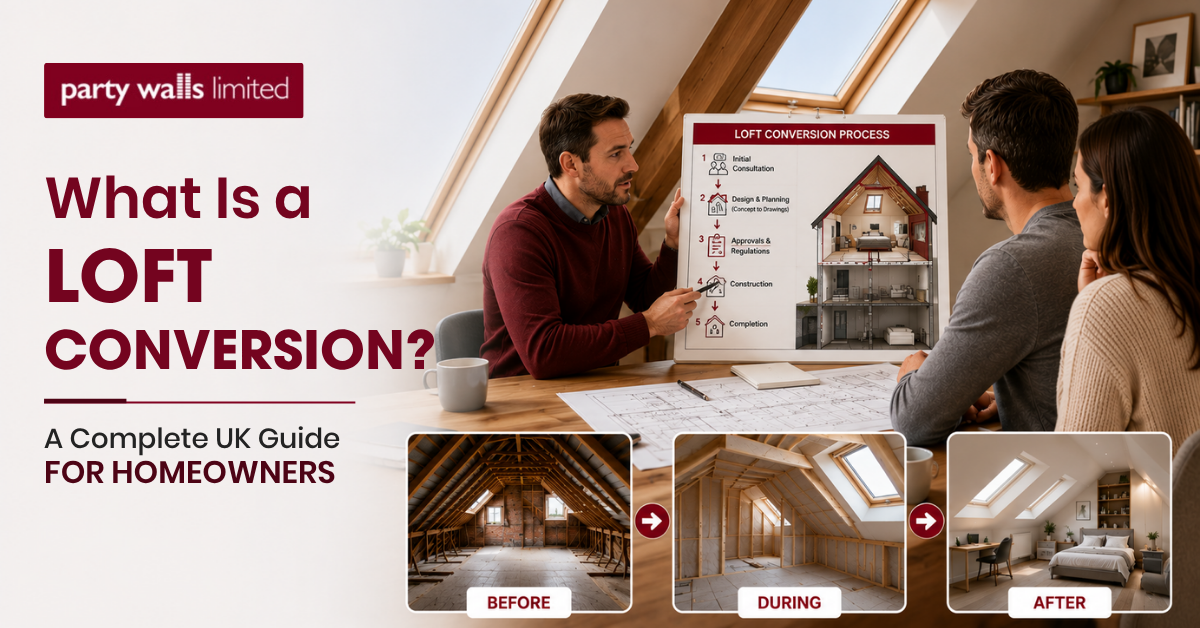
Loft conversions continue to be one of the most popular home improvement projects across the UK. Rising property prices and limited opportunities to expand outward are compelling homeowners to convert loft space into an additional bedroom, home office, en-suite, or living area rather than moving house. A well-designed loft conversion can add valuable living space and increase the overall value of a property.
However, before construction begins, many homeowners overlook one legal requirement: the party wall process. For semi-detached and terraced properties in particular, loft works often involve structural alterations to shared walls, which can bring the project under the scope of the Party Wall etc. Act 1996.
In case you fail to follow the correct procedure then it can lead to neighbour disputes, project delays, additional costs, and even legal action. Understanding how the process works from the outset helps you to make sure that your loft conversion proceeds smoothly while protecting both your interests and those of neighbouring property owners.
This guide explains everything you need to know about party wall agreements for loft conversions, including when they are required, how the process works, and how to avoid common mistakes.
.webp)
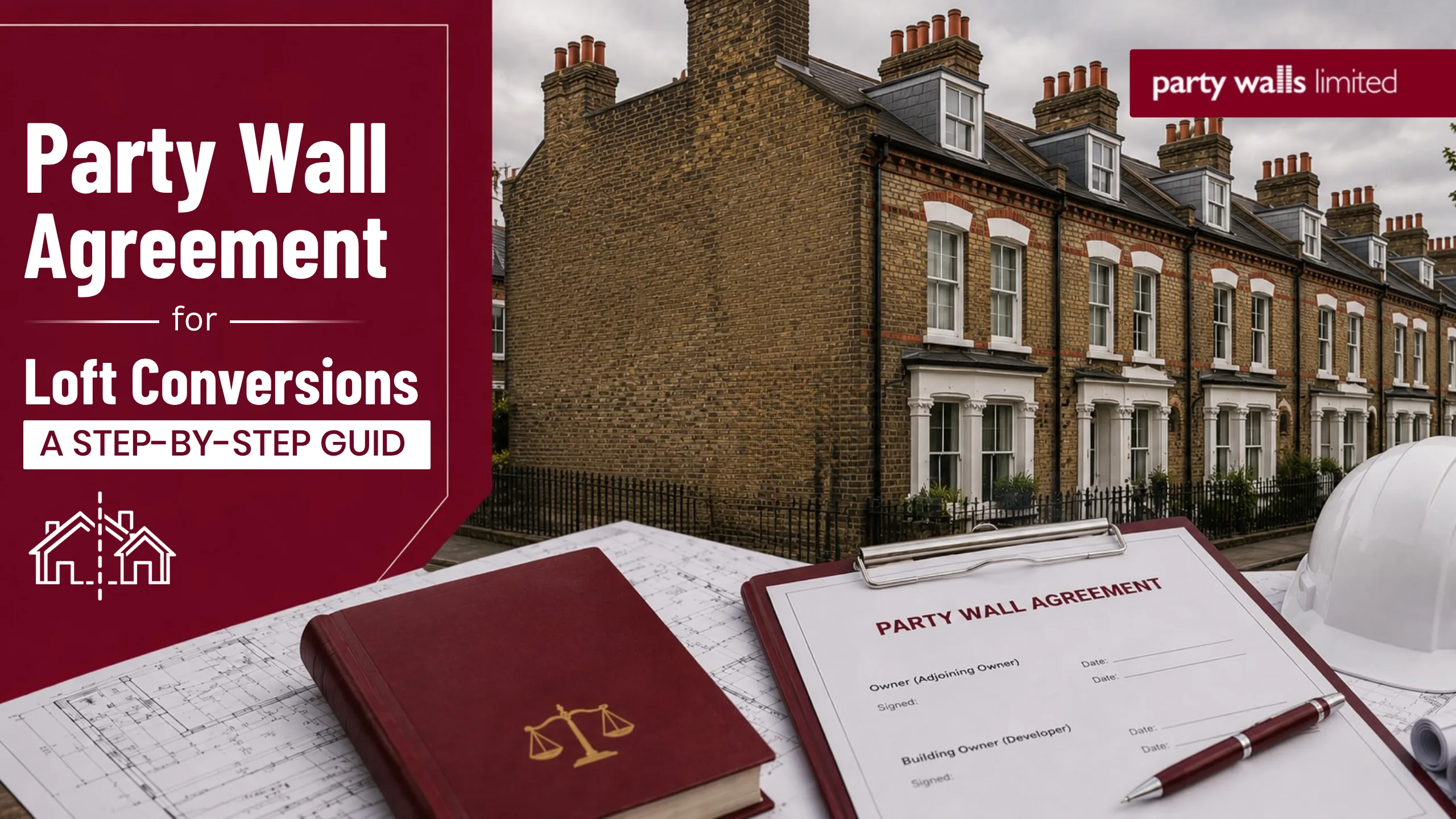
A party wall agreement is a legal arrangement created under the Party Wall etc. Act 1996. As soon as a Building Owner serves a valid Party Wall Notice, they are essentially agreeing to the legislation that holds them responsible for their actions. The Adjoining Owner that receives the party wall notice, is essentially agreeing as to how they receive the notice (‘as is’, or if they require further information or a schedule of condition report prior to works starting).
The legislation provides a framework for carrying out construction work that affects:
The Act aims to balance the rights of property owners wishing to undertake construction work with the rights of neighbours who may be affected by that work.
Many loft conversions involve structural alterations that directly affect a shared wall. Common examples include:
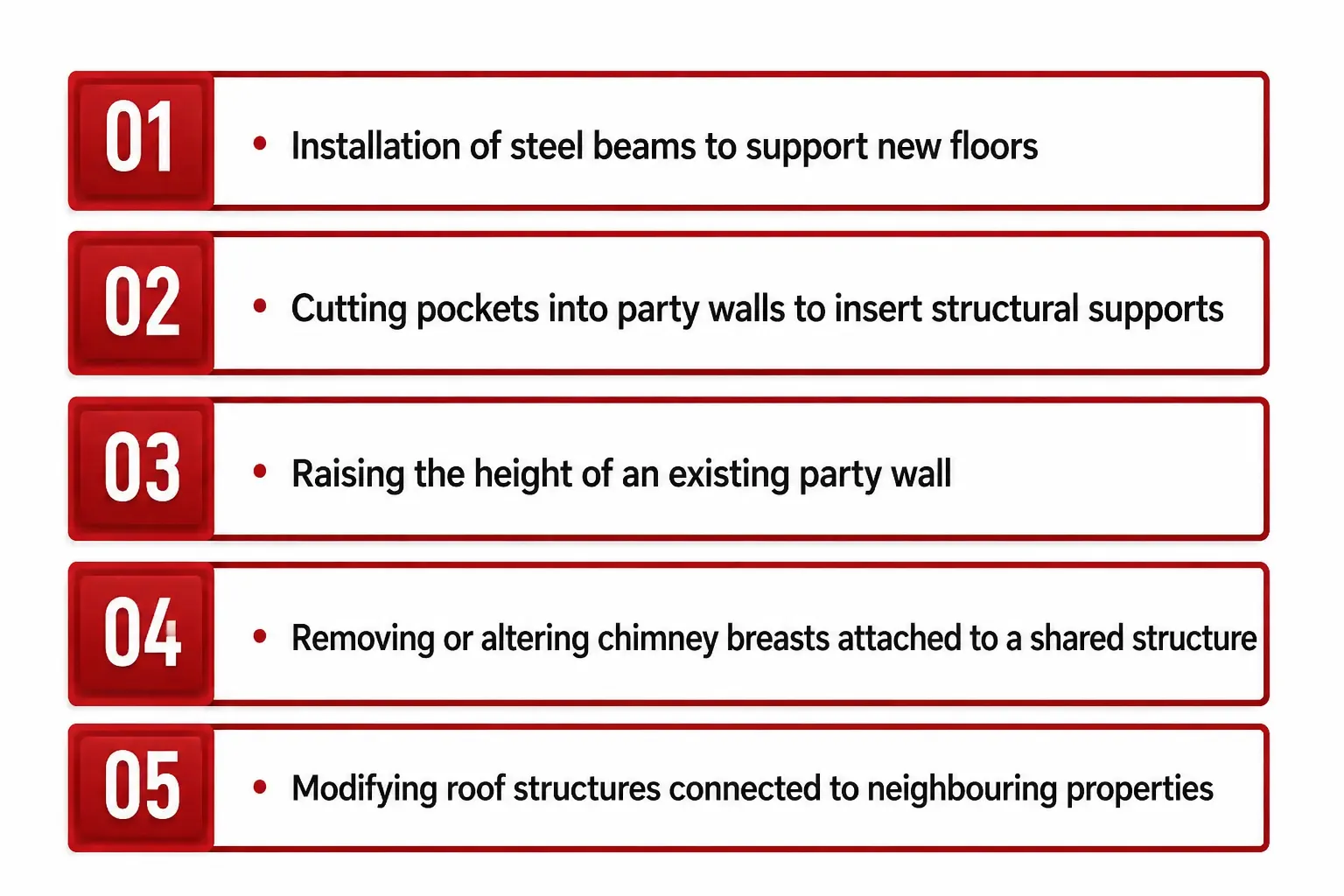
As these works affect a shared element of the building, the Party Wall Act comes into play.
A party wall notice is commonly required when undertaking loft work in:
If your plans involve structural works affecting a shared wall, notice must usually be served before the work begins.
An notice may not be required where:
The safest approach is to seek professional guidance before commencing work.
A qualified party wall surveyor can:
Early assessment can save considerable time and expense later in the project.
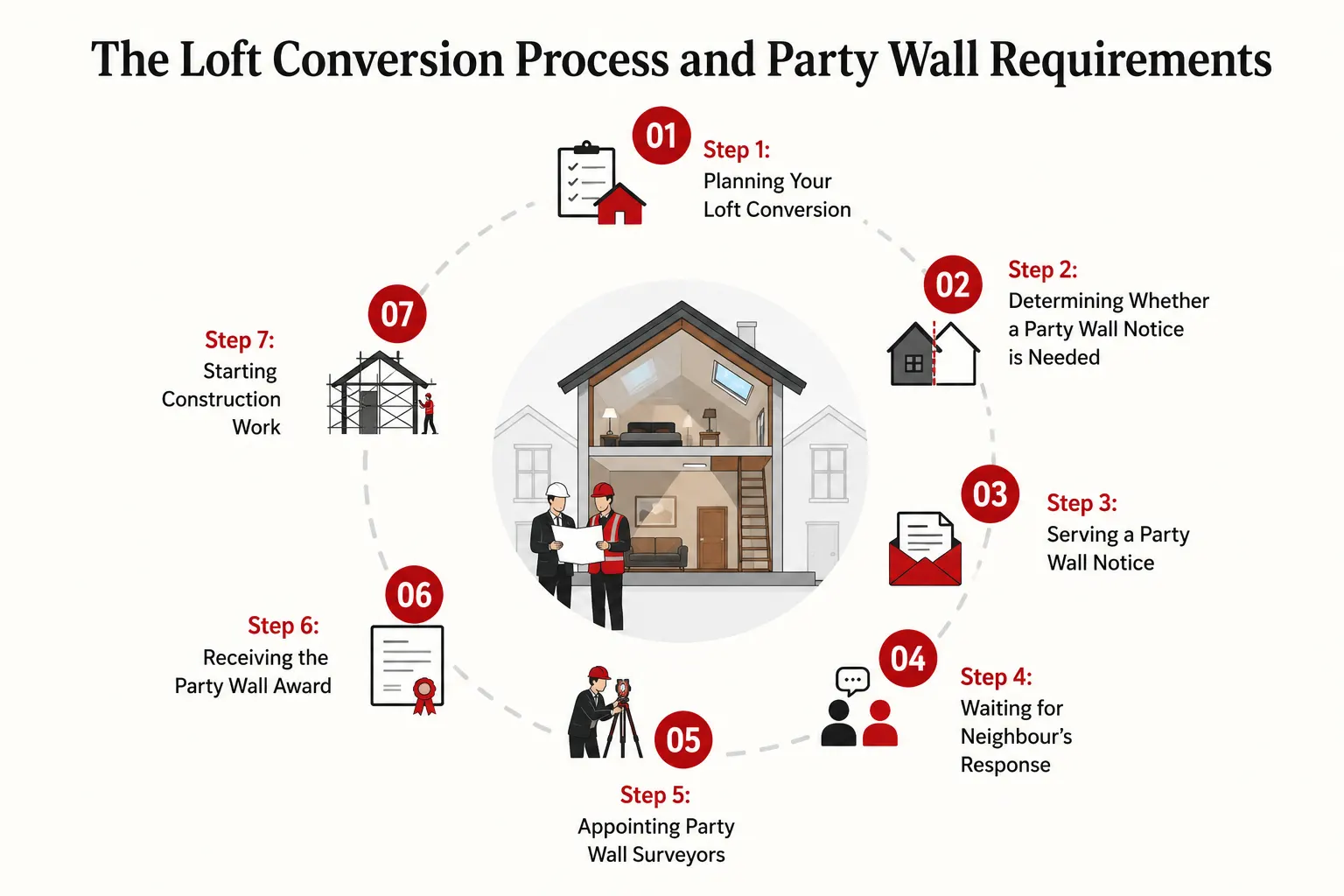
Every successful project begins with careful planning.
At this stage, homeowners typically:
Good planning helps to identify party wall requirements before construction schedules are finalised.
Construction drawings should be reviewed to determine whether any proposed works affect neighbouring properties. Common triggers include:
If the Act applies then a formal notice must be served to the adjoining owners. The notice should include:
Different notice periods apply depending on the nature of the works.
Once served, neighbours generally have 14 days to respond.
Possible outcomes include:
Consent
The neighbour agrees to the proposed works.
Dissent
The neighbour objects to the notice and requests surveyor involvement.
No Response
Failure to respond is treated as a dispute under the Act.
When a dispute arises then surveyors must be appointed. Options include:
Agreed Surveyor
Both parties appoint one impartial surveyor.
Separate Surveyors
Each owner appoints their own surveyor.
The surveyors' role is to protect both properties while facilitating the proposed works.
The surveyors prepare a legally binding document known as a Party Wall Award. The Award typically includes:
Once the Award has been served and notice periods have expired, construction can begin. Builders must comply with the Award's requirements throughout the project.
Many loft conversion projects involve activities that directly affect shared structures.
Examples include:
Neighbours often have understandable concerns regarding:
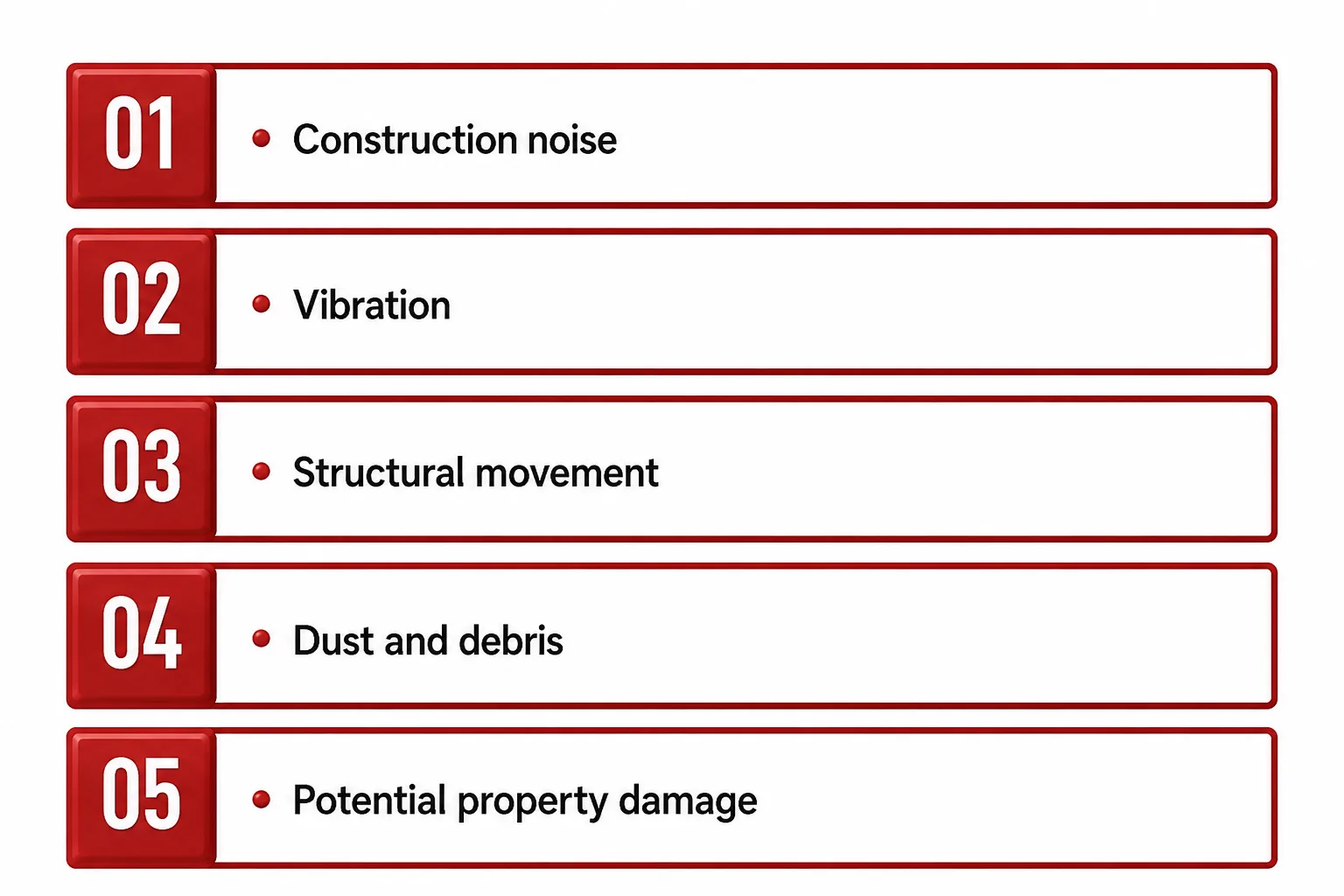
Addressing these concerns proactively often reduces the likelihood of disputes.
Practical measures include:
Good communication often proves just as valuable as legal documentation.
Proceeding without the correct procedures can create significant legal problems. Neighbours may:
An injunction can halt construction immediately.
Ignoring party wall obligations often increases overall project costs.
Potential expenses include:
Delays can quickly disrupt carefully planned construction programmes.
Projects may face:
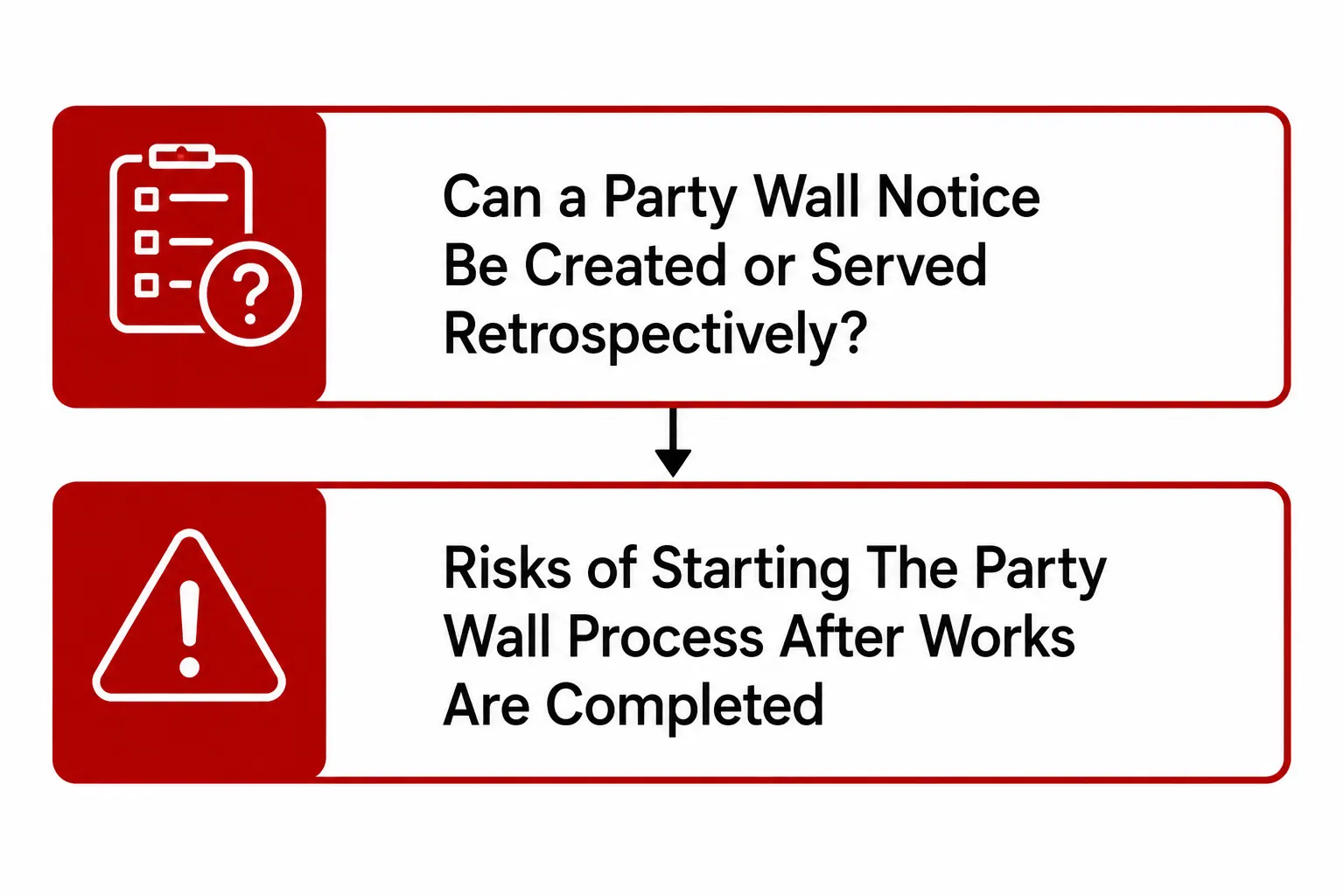
Many homeowners ask about coming to a party wall agreement after works get completed.
Unfortunately, the Act is designed to operate before construction begins. Retrospective notices (that notify someone of what they are proposing to do in the future) are not recognised in the same way as properly served notices and Awards.
Retrospective situations often create challenges.
These include:
If works have already commenced or finished:
Early action can help minimise potential consequences.
Experienced loft conversion builders understand the importance of party wall compliance.
They often work closely with:
This coordinated approach helps projects to run efficiently.
Before appointing contractors, ask:
Warning signs include:
Selecting the right contractor remains one of the most important decisions when planning to convert loft space.
Dormer conversions create additional headroom and floor space through an extension projecting from the roof slope. They are among the most popular domestic loft conversions across the UK.
This option extends the sloping side roof into a vertical wall. It works particularly well on semi-detached and end-of-terrace properties.
Mansard conversions involve more substantial roof alterations and often create the maximum amount of additional space. Planning requirements may be more extensive.
Rooflight conversions preserve the existing roof structure while adding roof windows. They are generally among the most cost-effective loft conversions available.
The ideal solution depends on:
Typical surveyor fees vary depending on location and complexity. Many standard residential projects fall within the range of several hundred to several thousand pounds.
Obtaining accurate quotations early helps avoid unexpected expenses.
Late notices frequently delay construction schedules.
Planning approval and party wall procedures are entirely separate legal processes. One does not replace the other.
Builders unfamiliar with the loft conversion process can inadvertently create compliance issues.
Beginning construction prematurely remains one of the most common and costly mistakes homeowners make.
A party wall agreement, via a response and outcome to served Party Wall Notices is one of the most important legal steps when undertaking loft conversions in semi-detached and terraced properties. Structural alterations such as steel beam installations, chimney breast removals, and roof modifications frequently trigger obligations under the Party Wall etc. Act 1996.
The correct loft conversion process protects both property owners and neighbours, reduces the likelihood of disputes, and helps keep construction projects on schedule. From serving notices to obtaining a Party Wall Award, each stage plays a crucial role in ensuring compliance and safeguarding everyone involved.
If you are planning to convert loft space into a valuable new living area, seek professional advice as early as possible. Speaking with an experienced party wall surveyor before work begins can save time, reduce costs, and provide peace of mind throughout your project.

Most straightforward party wall matters take between four and twelve weeks. The timeline depends on neighbour responses, surveyor availability, and project complexity.
A neighbour cannot generally prevent lawful construction simply because they dislike the project. However, they can dissent to the notice, triggering the surveyor process and requiring a Party Wall Award before work proceeds.
In most cases, the building owner undertaking the works pays the reasonable costs associated with the party wall process, including surveyor fees.
Yes, where proposed works fall within the scope of the Party Wall etc. Act 1996. Failing to comply can expose homeowners to legal action and project delays.
If no response is received within the statutory period, a dispute is deemed to have arisen. Surveyors must then be appointed to prepare a Party Wall Award.