Planning Permission vs Permitted Development (UK): Key Differences Explained
July 17, 2026
Written & Reviwed by
No items found.
If you're planning home improvements—or concerned about building work happening next door—understanding the difference between planning permission and permitted development rights (PDR) is essential.
In the UK, not all building work requires formal approval, but all work must comply with planning rules. This guide explains the key differences, when each applies, and how neighbours can check whether a project has been properly approved.
What Is Planning Permission?
Planning permission is formal approval granted by your Local Planning Authority (LPA) for building work or changes in land use.
When Do You Need Planning Permission?
You will usually need planning permission if your project:
Involves large extensions or major structural changes
Changes the use of a property (e.g., house to flats)
Affects a listed building or is in a conservation area
Exceeds permitted development size or height limits
Planning Permission Process (UK)
The process typically includes:
Submitting architectural plans and drawings
Paying a planning application fee
Public consultation (neighbours are notified)
Review by planning officers
Decision within ~8–12 weeks
What Is Permitted Development?
Permitted Development Rights (PDR) allow homeowners to carry out certain improvements without needing full planning permission.
These rights are set nationally but enforced locally.
Common Permitted Development Examples
Rear extensions within size limits
Loft conversions (within volume restrictions)
Garden rooms, sheds, or outbuildings
Porches and conservatories (within limits)
Permitted Development Rules
To qualify, projects must:
Stay within strict size and height limits
Not cover excessive garden space
Avoid front-facing alterations (in many cases)
Comply with restrictions in protected areas
Important: If rules are breached, planning permission may still be required.
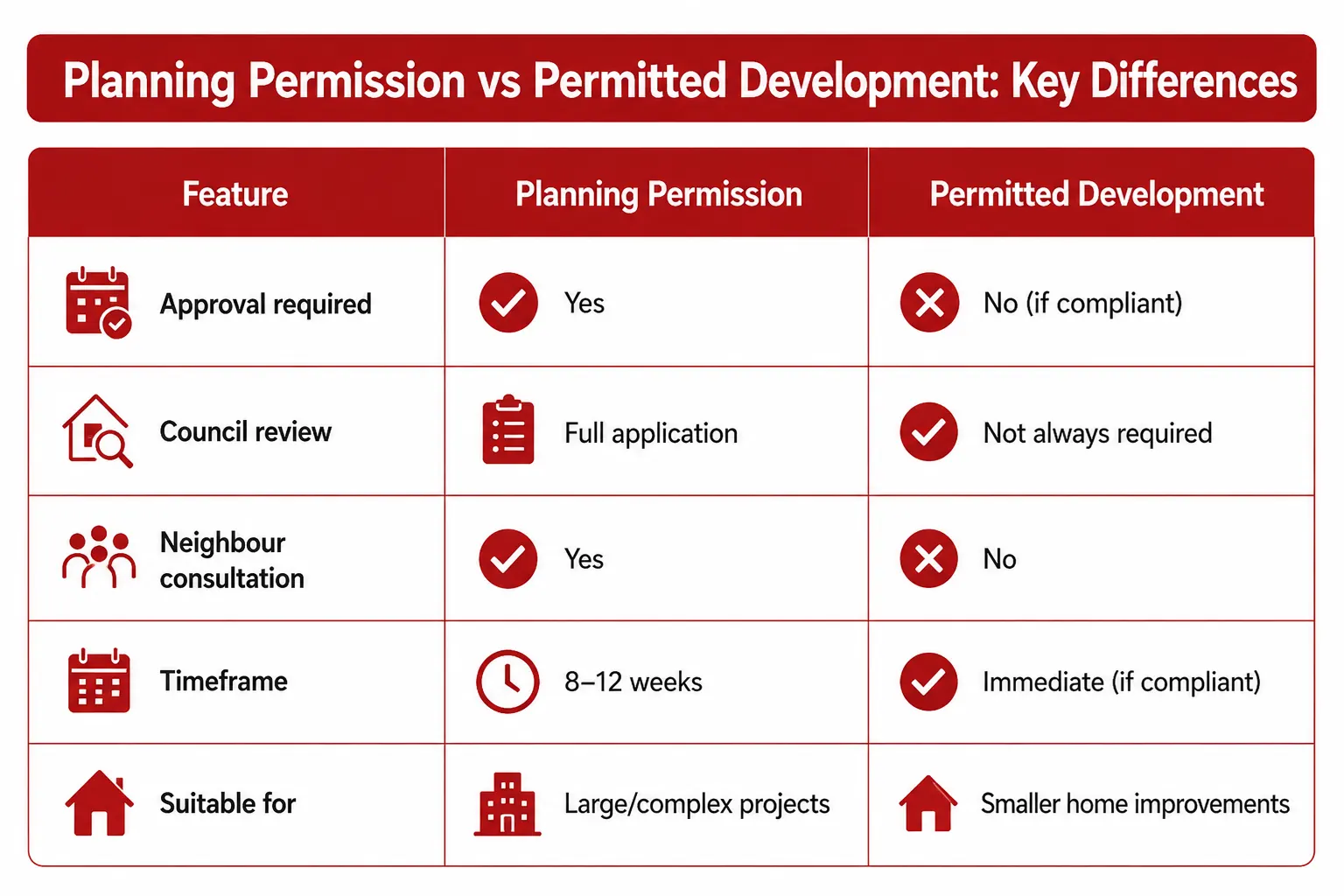
Planning Permission vs Permitted Development: Key Differences
What Is a Lawful Development Certificate (LDC)?
A Lawful Development Certificate (LDC) is official confirmation from the council that a project is legal under permitted development rules.
Why Homeowners Apply for an LDC
Proof the work is lawful
Avoid disputes with neighbours
Required by buyers/solicitors when selling
Peace of mind before starting work
How Neighbours Can Check Planning Permission in the UK
If you're wondering “How can I check if my neighbour has planning permission?”, here are the key steps:
1. Search the Local Planning Portal
Visit your council’s website and:
Search by property address
View planning applications and decisions
Access drawings and documents
If planning permission is required, it must appear here.
2. Check for a Lawful Development Certificate
If no planning application is listed:
Look for an LDC (Lawful Development Certificate)
This confirms the council has reviewed the work
3. Look for Neighbour Notifications
For planning applications:
You should receive a notification letter
A site notice may be displayed nearby
No notification may indicate permitted development.
4. Contact the Local Planning Authority
Still unsure? You can:
Contact the planning department directly
Provide the property address
Request confirmation of approval or compliance
What If There Is No Record of Approval?
If you can’t find planning permission or an LDC:
The work may still fall under permitted development
Or it could be unauthorised
What You Can Do
Speak with your neighbour politely
Ask if they have documentation
Contact planning enforcement if concerned
Why Understanding Planning Rules Matters
Knowing the difference between planning permission and permitted development helps:
Avoid neighbour disputes
Ensure legal compliance
Protect property value
Maintain local planning standards
Final Thoughts
Whether you're a homeowner planning an extension or a neighbour seeking reassurance, understanding UK planning rules is crucial.
Not all building work requires planning permission—but all work must follow the law.
Pro Tip: Always check your local council’s planning portal first—it’s the quickest way to confirm whether a project has been approved.
FAQs
Do all extensions need planning permission in the UK?
No. Many smaller extensions fall under permitted development, provided they meet size and design limits.
Can neighbours object to permitted development?
No formal objection process exists, but concerns can be raised with the council if rules are being breached.
Is a Lawful Development Certificate required?
Not legally required but strongly recommended for proof and future property sales.
.png)
%20Key%20Differences%20Explained%20.webp)

.webp)
.webp)