.png)
More and more property owners across the United Kingdom are investing in loft conversions, basement excavations, rear extensions, commercial refurbishments, and structural renovations instead of relocating. As construction activities continue in densely populated residential areas, it is important to understand the legal and technical processes behind neighbouring works.
One of the most common areas of confusion is the difference between a Schedule of Condition and a Party Wall Survey.
The good news is that they are the exact same thing!
However, in the world of Party Wall Surveyors, and within the Party Wall process, they are only referred to as the Schedule of Condition.
The mix up comes from the word ‘surveyor’, in the term Party Wall Surveyor, which is completely understandable. However, a party wall surveyor is called a surveyor because they belong to the surveying profession, not because their main output is a "survey" in the everyday sense.
Historically, a surveyor is someone who surveys land, buildings, boundaries, and construction works. The word comes from "to survey" meaning "to inspect, oversee, and assess". A party wall surveyor's role under the Party Wall etc. Act 1996 is to inspect and assess matters relating to building works affecting neighbouring properties and to determine rights and obligations under the Act.
The confusion arises because homeowners often associate "surveyor" with a building survey, homebuyer report, or measured survey. A party wall surveyor does something different.
Their duties typically include:
In fact, the Party Wall Award is usually the surveyor's principal document. The Schedule of Condition is just one piece of evidence that may be attached to the Award. It is not the reason the profession is called surveying.
A Schedule of Condition is a professionally prepared report that documents the visible condition of a property before a nearby construction or renovation work begins.
The objective of a schedule of condition survey is to take note of clear evidence of any existing defects or damage before construction activity takes place. If disputes later arise regarding cracks, movement, or damage claims, the same report can be used as the shield.
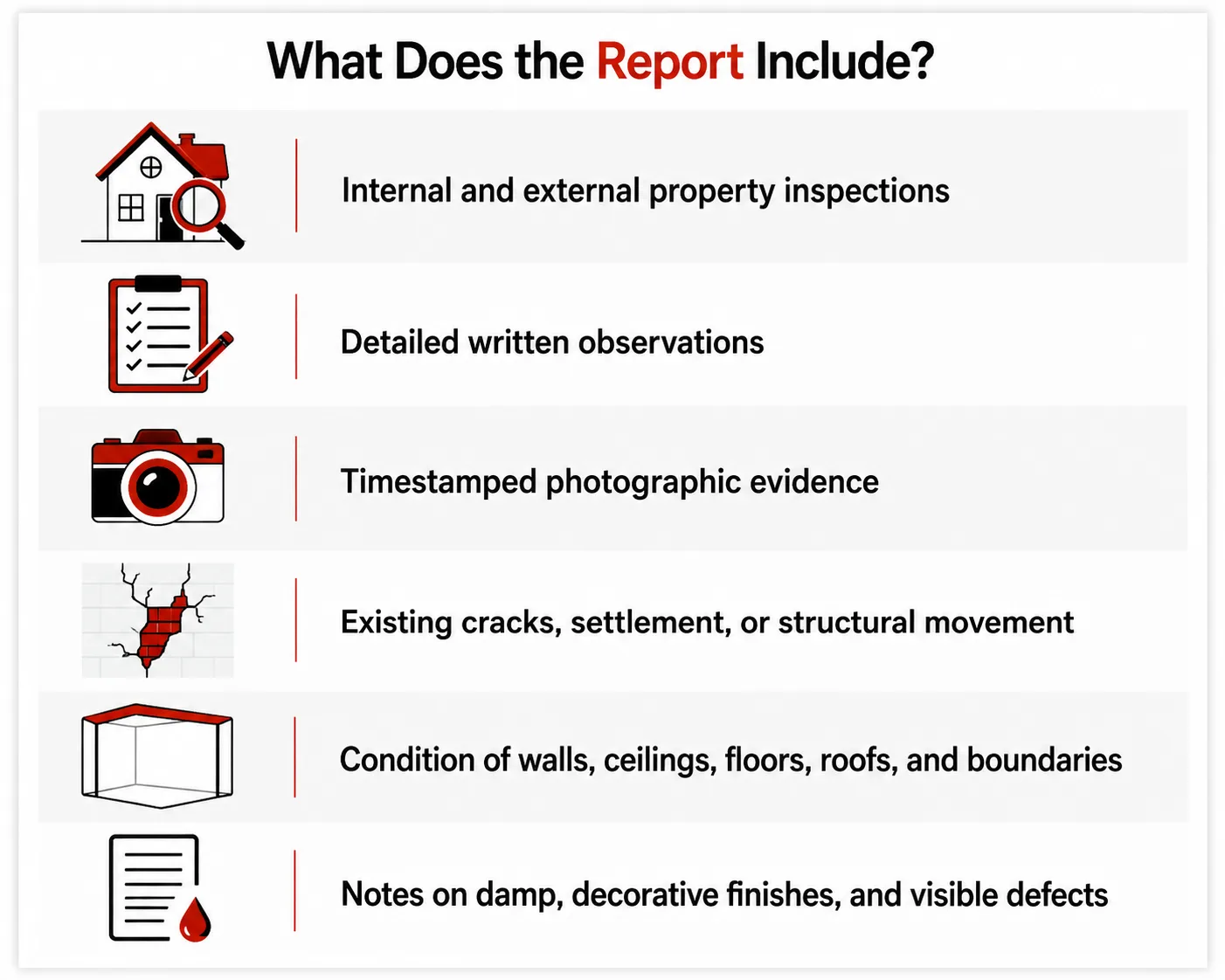
A professional Schedule of Condition consists of:
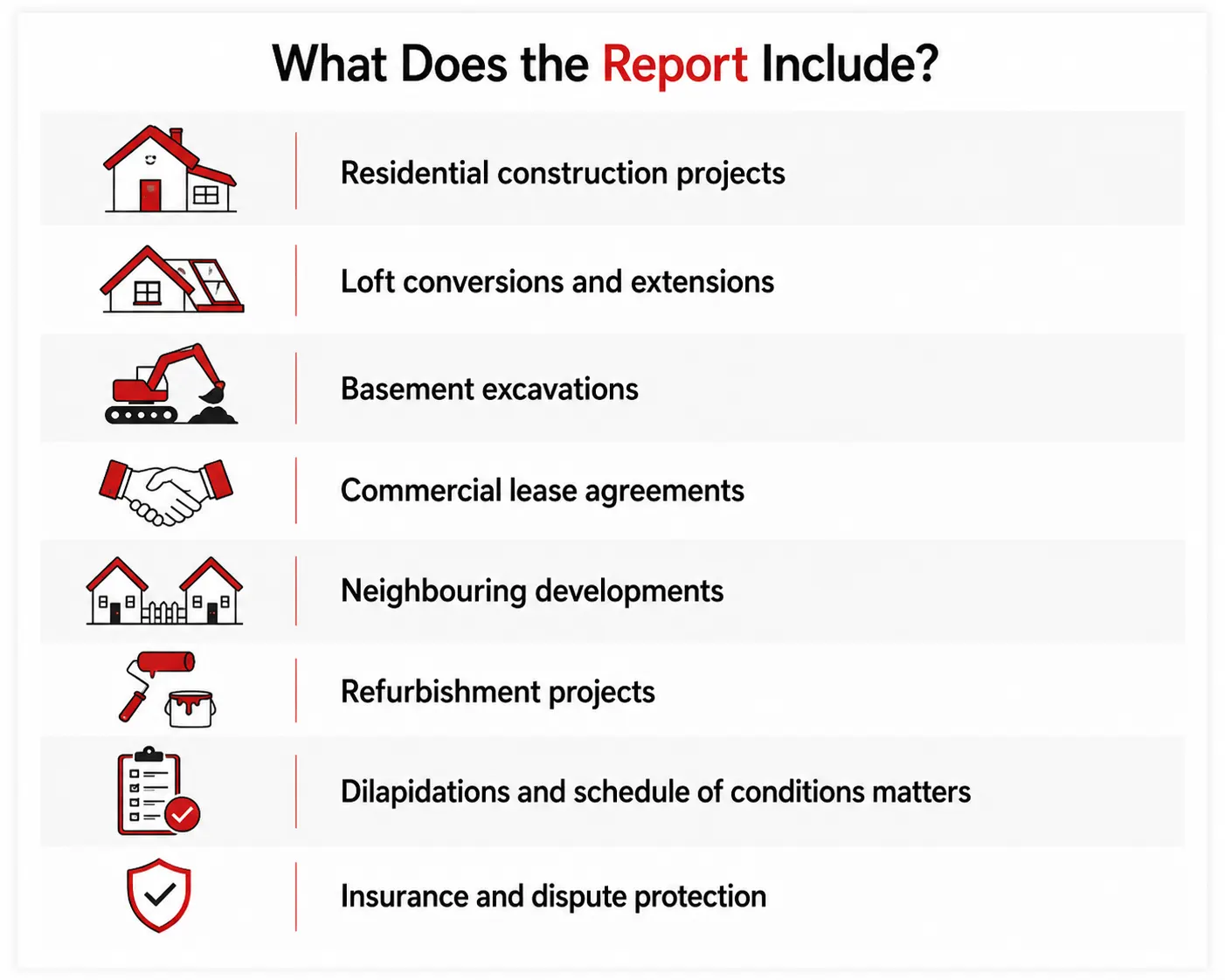
A Schedule of Condition is commonly used for:
One biggest advantage of a schedule of condition survey is that it shields you from any false allegations and disputes. Because without proper evidence, it can become difficult to prove whether the damage existed before construction started.
The third party wall surveyor is an independent surveyor who is selected when the two appointed surveyors cannot agree on some aspects of the Award. Their role is to:

Before any construction work starts, the Building Owner is required to serve the relevant Party Wall Notice to the adjoining neighbours.
Neighbours have three options:
if no response is received within 14 days, then a legal dispute is automatically deemed to exist.
The parties have the right to appoint one agreed surveyor or separate surveyors for each side.
The surveyor then records the neighbouring property's existing condition.
The Party Wall Award usually includes the following:
This process ensures that the construction proceeds legally and safely.

Another common source of confusion is the difference between a Party Wall Surveyor and a Structural Surveyor.
Many projects require both professionals working together.
A Schedule of Condition is needed:
Early documentation can protect homeowners, contractors, developers, and adjoining owners in case of insurance claims or legal disputes arise later.
In case you fail to obtain a Schedule of Condition then it can create the following risks for you:
.png)
A relatively small upfront survey cost could prevent thousands of pounds in future legal claims.
Typical questions homeowners ask are:
The general rule of thumb says that prevention is cheaper than litigation.
Construction vibration, excavation, and structural alterations often lead to neighbour concerns regarding cracking or movement.
In the absence of appropriate evidence, it becomes extremely difficult to prove whether damage existed before works began.
A professional Schedule of Condition can:
Property owners frequently ask: how much does a schedule of condition cost?
Pricing depends on several factors, such as:
Commercial properties may cost significantly more depending on:
Inspection times vary depending on the property type and complexity.
Report preparation is usually completed within several working days, although fast-track services are often available for urgent projects.
When selecting a party wall surveyor, property owners should:
Choosing inexperienced or ultra-low-cost surveyors can increase the risk of:
A Schedule of Condition can protect property owners by documenting the existing condition of buildings before construction.
Before starting any structural works, homeowners, landlords, and developers should consult experienced surveyors in the UK to ensure that they have the correct legal and evidential protection in place.

No. It is not always legally mandatory, but it is strongly recommended for construction projects that may impact the neighbouring properties.
No. But a neighbour can ‘dissent’ to the notice, thus causing a ‘dispute’ under the Party Wall Act, which provides a dispute resolution process involving surveyors.
Usually, the Building Owner carrying out the works pays the fees.
Residential projects cost ranges from approximately £350 to £750 depending on the property and complexity.
Yes. This is known as an Agreed Surveyor arrangement.