.png)
Planning a loft conversion, rear extension, chimney breast removal, or structural alteration? Before builders arrive on site, there may be an important legal step to complete. If your proposed works affect a shared wall between properties, you will often need to serve a party structure notice under the Party Wall etc. Act 1996. This notice formally informs your neighbour about the planned works and gives them an opportunity to review the proposals before construction begins.
Many homeowners discover Party Wall requirements only after plans have been drawn up and contractors have been booked. Unfortunately, leaving the process too late can delay a project that is otherwise ready to start. This guide explains exactly what a party structure notice is, when it is required, the correct party wall notice period, what happens after service, and how the process fits into the wider Party Wall framework.
A party structure notice is a formal notice served under Section 3 of the Party Wall etc. Act 1996 It is applicable when a building owner wants to carry out certain works to a shared wall, structure, or fence with a neighbouring property.
The purpose of this notice is to give an advance notice of works to the adjoining owner that could affect a shared structure. Many people use the phrase "party wall notice" as a catch-all term, but there are actually different notices under the Act.
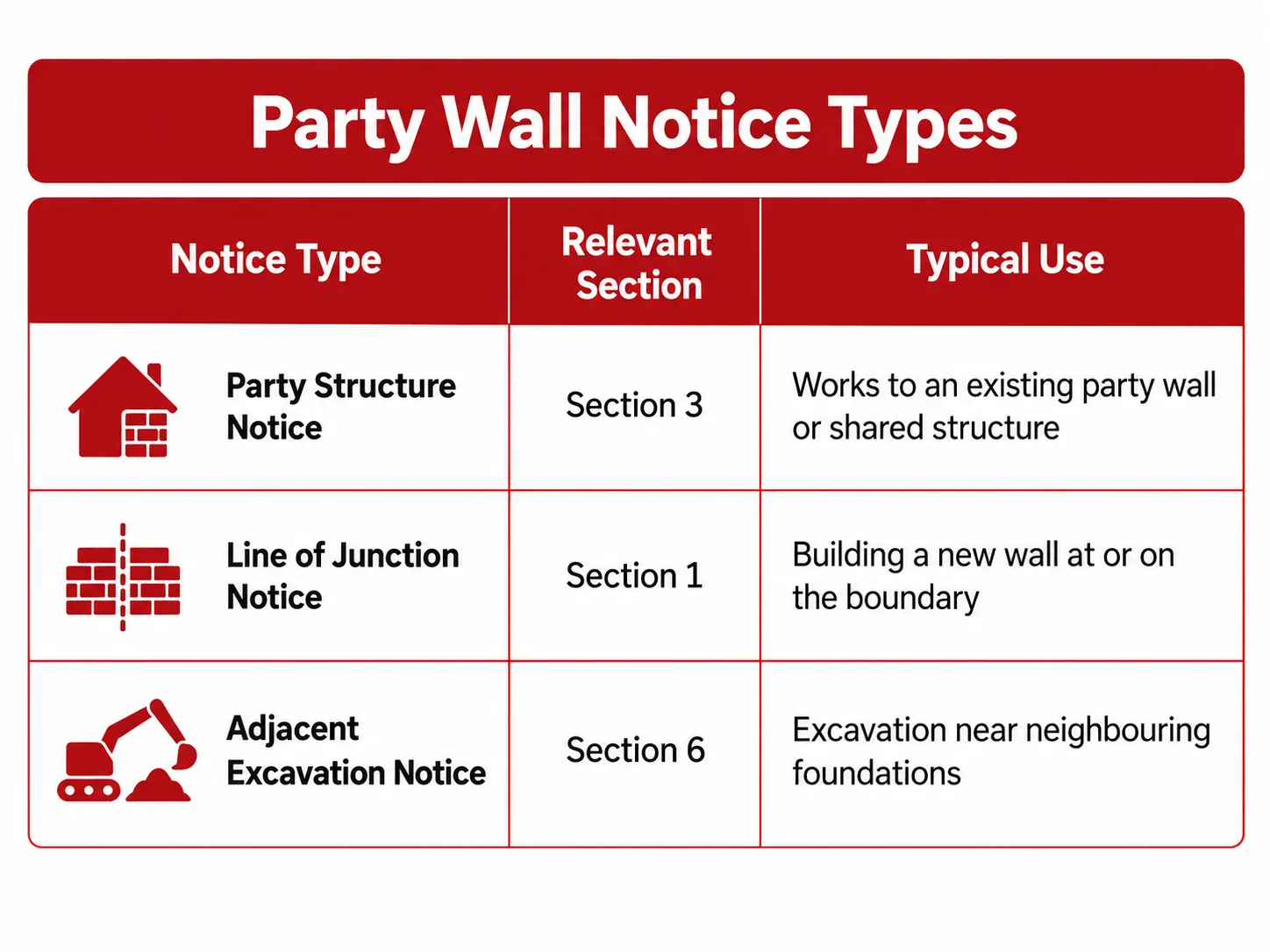
A party structure notice is specifically related to alterations, repairs, or structural works that might affect an existing shared wall or structure.
This distinction matters because different notice requirements and timescales may apply depending on the nature of the proposed works.
Not every building project requires a party structure notice.
However, many common residential improvements do.
Typical examples include:
In London and the South East, loft conversions are among the most common reasons homeowners need to serve a notice.
A project may look straightforward on paper, but once structural steelwork is introduced, Party Wall obligations often arise.
You may need a party structure notice if:
✓ The wall is shared with a neighbouring property
✓ The works involve structural alterations
✓ Steel beams will be inserted into the wall
✓ The wall will be raised, cut into, or strengthened
✓ The project affects a party fence wall
If you're unsure, obtaining professional Party Wall Advice before work begins can help avoid delays later.
One of the most common mistakes homeowners make is underestimating the party wall notice period.
The Act requires notices to be served before works begin.
For party structure notice matters, the standard notice period is:
At least 2 months before the proposed start date.
This differs from other notices under the Act.
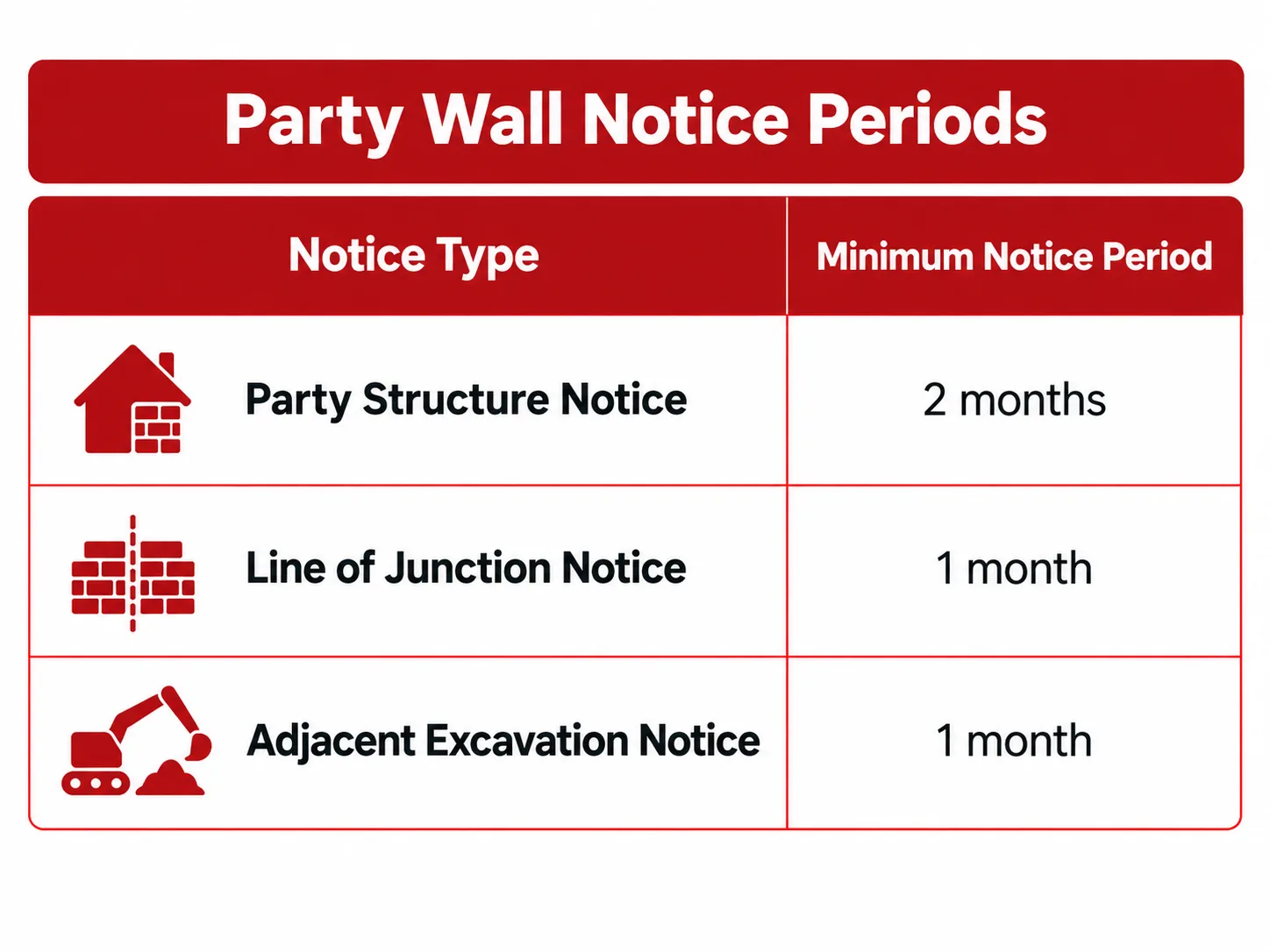
Although these are minimum periods, experienced surveyors often recommend serving notices earlier.
Why?
Because the statutory clock is only one part of the process.
Neighbours may have questions.
Surveyors may need to be appointed.
A party wall award may need to be prepared.
Waiting until the last minute frequently results in avoidable delays.
The adjoining owner generally has 14 days to respond after receiving a valid notice. If no response is received within that period, then the law treats this as a deemed dispute. At that point, surveyors become involved and the matter proceeds through the dispute resolution process set out in the Act.
Silence does not stop the project.
It simply moves the process to the next stage.
A valid party structure notice must contain certain information.
While many homeowners search online for a party wall agreement template, it is important to understand that the notice itself is a legal document and should be prepared carefully.
Typical information includes:
The notice should provide enough information for the neighbour to understand what is being proposed.
Over the years, surveyors regularly encounter notices that contain errors.
Common problems include:
An invalid notice can delay the entire project because the process may need to start again.
This is one reason many homeowners look for assistance from a party wall surveyor rather than relying on a generic party wall agreement template found online.
Once the party structure notice has been served, the adjoining owner has several options.
The neighbour agrees to the work.
In straightforward cases, the project can move forward without a formal dispute.
Many owners still choose to prepare a schedule of condition party wall reports for additional protection.
The neighbour does not consent.
This does not stop the work.
Instead, surveyors are appointed and a party wall award is prepared.
If the neighbour fails to respond within 14 days then a dispute is deemed to exist.
The surveyor appointment process then begins.
A party wall schedule of condition report records the condition of the neighbouring property before works begin.
It includes the following:
These reports prevent disputes because they provide a clear record of the property's condition prior to construction.
Questions about party wall agreement cost arise on almost every project.
The reality is that costs vary considerably depending on the complexity of the works and the surveyor arrangements involved.
Factors affecting cost include:
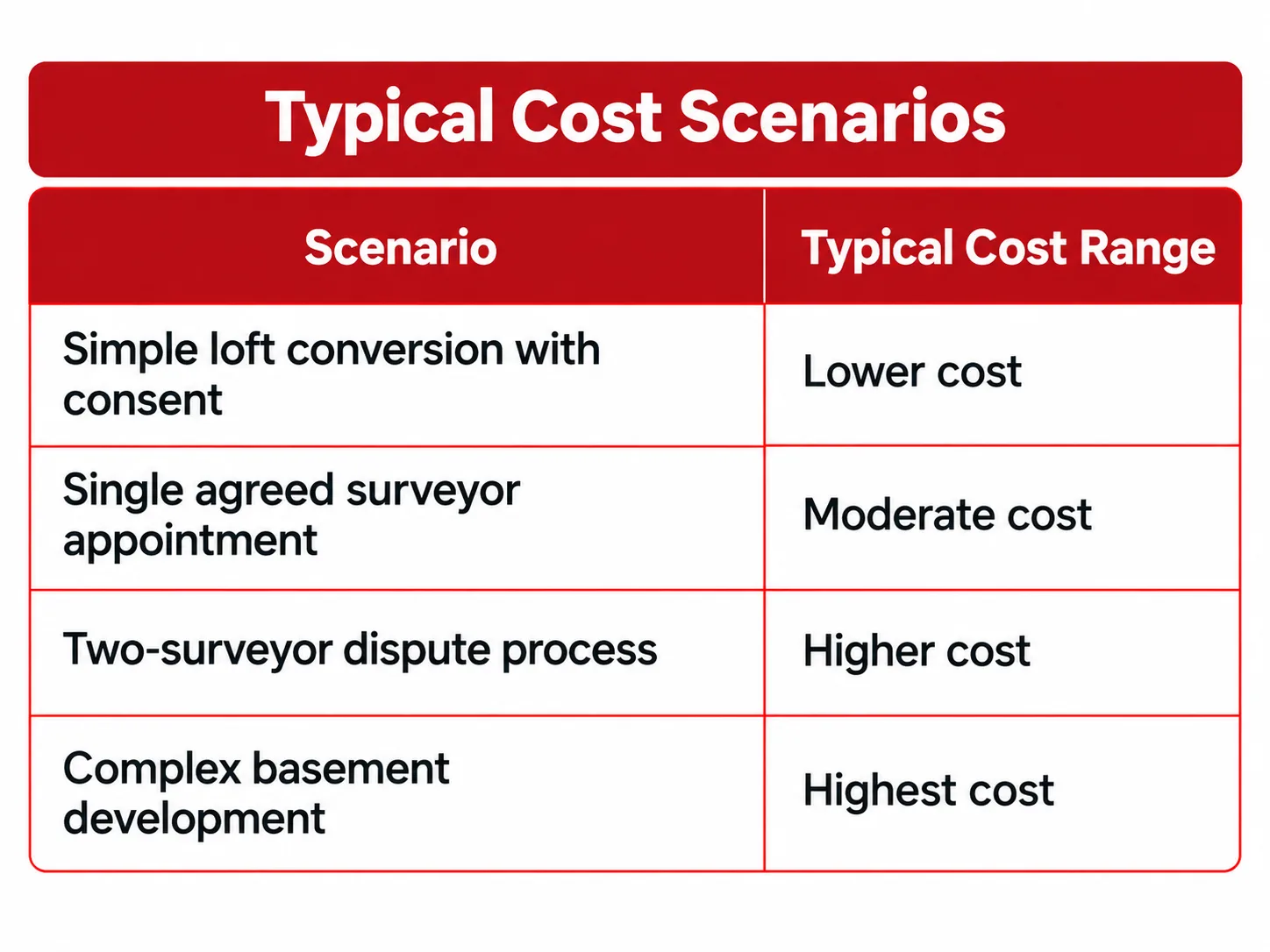
In most situations, the building owner undertaking the works pays the reasonable professional fees associated with the Party Wall process.
Although homeowners often focus on party wall agreement costs, the expense is usually modest compared with the potential cost of delays, disputes, or legal proceedings.
Legally, not every project requires a surveyor.
However, many homeowners find that professional guidance makes the process considerably easier.
A party wall surveyor can help with:
Where a dispute arises, there are generally two options:
One surveyor acts independently for both owners.
This is often quicker and more cost-effective.
Each owner appoints their own surveyor (The Building Owner’s Surveyor and The Adjoining Owner’s Surveyor).
The surveyors work together to prepare the award.
Some projects require temporary access to neighbouring land.
The party wall act right of access provisions may allow access where it is genuinely necessary for works covered by the Act.
These rights are limited and subject to legal safeguards.
Party Wall matters are often much easier when addressed early.
If your plan is loft conversion or any other structural alteration then professional advice can help you avoid delays and misunderstandings.
We offer party walls free advice for homeowners, developers, architects, and property owners who are looking to understand their obligations under the Party Wall etc. Act 1996.
If you're unsure whether a party structure notice is required then speak to an experienced surveyor before work starts.
For homeowners searching for a party wall surveyor in South London or wider London coverage, early consultation can help clarify the correct process and likely timescales.
A party structure notice is one of the most important documents under the Party Wall etc. Act 1996.
Understanding the correct party wall notice period and responding appropriately to neighbour feedback can make the difference between a smooth project and unnecessary delays.
One should not only focus on party wall agreement cost but also consider the greater risks from failing to follow the correct process in the first place.
Therefore, in order to ensure compliance and protect your relationships with neighbours you should get professional Party Wall Advice.

A party structure notice is valid for 12 months from the date it is served. If works do not commence within that period then a new notice may be required.
A neighbour can dissent to the notice, but they cannot automatically prevent lawful works from proceeding. A dispute resolution process involving surveyors is then followed.
If the adjoining owner does not respond within 14 days then a dispute is deemed to have arisen under the Act and consequently surveyors should be appointed.
No. A party structure notice starts the legal process. A party wall agreement or Party Wall Award is the outcome that follows depending on the neighbour's response.
Not always. But, homeowners may require a party wall surveyor to make sure that the notices are valid, disputes are managed rightly, and legal requirements are met.
Often, yes. Loft conversions frequently involve inserting steel beams into a shared wall, which commonly triggers the need for a party structure notice under the Act.