.png)
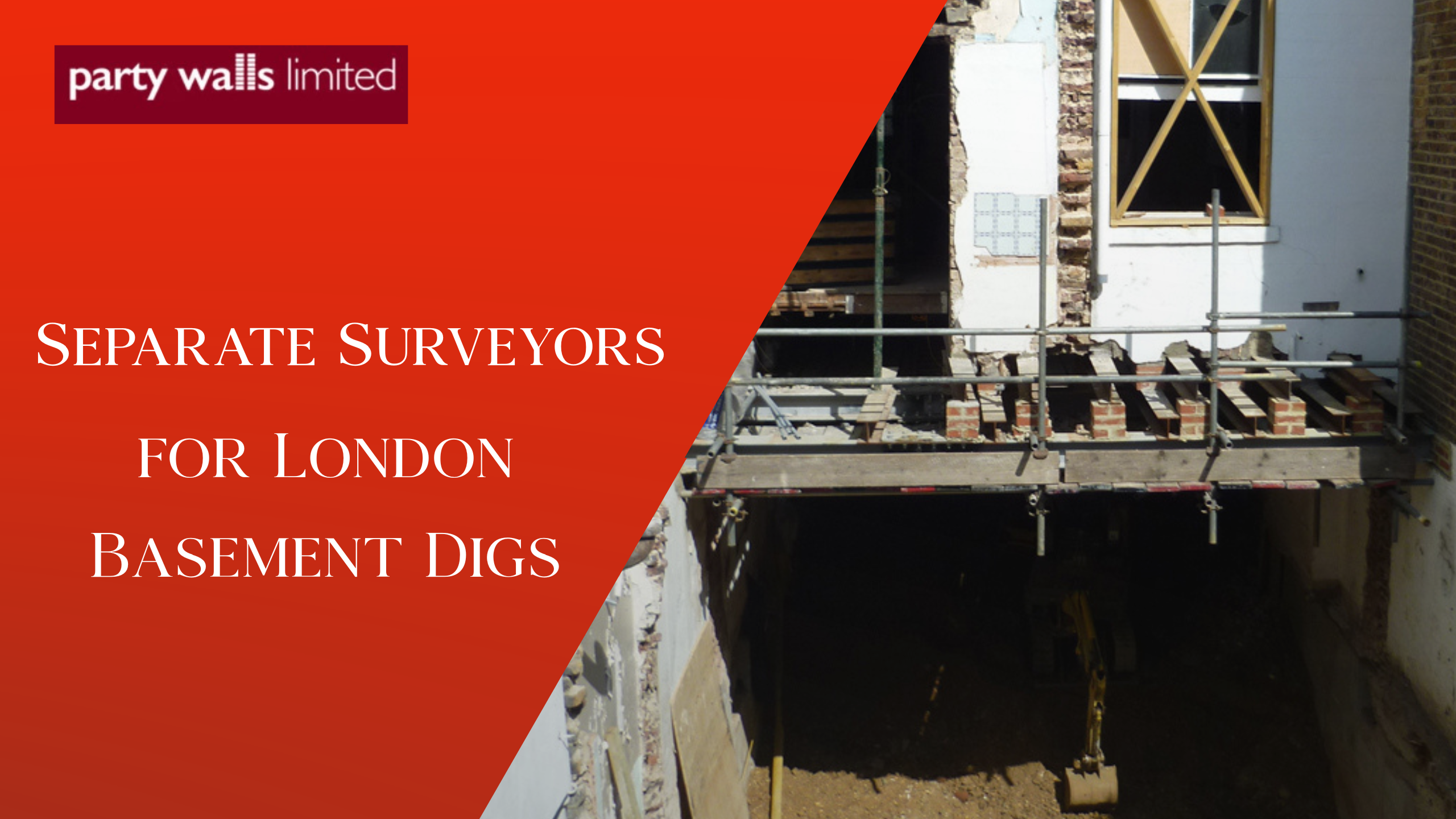
A basement excavation is not a standard home improvement. Unlike a loft conversion, it usually involves Section 6 works under the Party Wall Act 1996, digging directly beneath the foundations of shared Victorian and Edwardian buildings, where the margin for error is razor-thin.
Given this complexity, the Agreed Surveyor model can become overstretched. Appointing separate party wall surveyors introduces a system of professional checks and balances that helps prevent potential structural failure and costly legal gridlock.
One key advantage of having separate surveyors is that the Adjoining Owner’s Surveyor is entitled to appoint an independent Checking Engineer, with the reasonable cost met by the Building Owner.
This provides a specialist professional peer review, ensuring that the underpinning sequences and temporary work designs are technically sound.
Moreover, separate surveyors commonly mandate site visits at mid-excavation, the point of highest structural risk, to ensure contractors adhere strictly to the approved sequence and do not take shortcuts.
To further safeguard all parties, surveyors can assist and advise the Building Owner to secure funds in an Escrow Account, a financial safety net introduced as a key requirement in 2026 for major London basement projects. This ensures that if a contractor fails or damage occurs, funds are immediately available to protect neighbouring properties.
Alongside financial protections, modern vibration and movement sensors provide real-time monitoring of millimetre-level shifts during excavation. This technology allows work to be paused before any visible damage happens, offering early warning and peace of mind.
Conflicts of interest can arise if an Agreed Surveyor must balance competing priorities between neighbours. Separate surveyors, by contrast, serve as clear, independent advocates for their respective clients, ensuring no one is left “caught in the middle.”
By law, the two surveyors must appoint a Third Surveyor at the outset. If they disagree on safety measures or protocols, the Third Surveyor delivers a binding decision, preventing the project from stalling.
Appointing separate surveyors acts as an additional level of scrutiny for London basement digs. By providing independent oversight, professional peer review, and clear conflict resolution, they help mitigate risk, protect neighbouring properties, and keep projects on track. For complex basement excavations beneath shared Victorian and Edwardian structures, separate surveyors are essential.
Contact Party Walls Limited for a Technical Basement Consultation Today!
A: No, but for high-risk excavations, most professionals recommend it to ensure a "Peer Review" of the structural method statement.
A: The Building Owner. While this adds to the upfront cost, it is your best defence against an injunction or a negligence claim.
A: It takes longer to negotiate (8–12 weeks), but it significantly reduces the risk of the project being stopped mid-build by a neighbour’s legal challenge.
In London, a basement is the most complex project you will ever undertake. With the right professional safeguards in place, it doesn't need to be the most stressful.